
Understanding Penis Size Percentile: The Complete Breakdown
Understanding Penis Size Percentile: The Complete Breakdown
Table of Contents
Introduction
Penis size percentile is a statistical method used to compare an individual’s measurement with measurements collected from a large population of adult men. Rather than focusing only on the measurement itself, a percentile shows where that measurement falls within the overall distribution. This provides valuable context and helps explain how a measurement compares with others based on standardized scientific research.
Every individual is different, which is why percentile results naturally vary. Factors such as accurate measurement, biological variation, and the scientific reference data used for comparison all influence the final result. Understanding these factors is just as important as knowing the percentile itself because they determine how meaningful and reliable the comparison will be.
This guide explains how penis size percentiles work, what influences the final result, and how percentile rankings should be interpreted. Whether you are simply curious about the statistics or want to compare your own measurements with published research, this article provides everything you need to understand the numbers correctly.
If you want to estimate your measurements first, try the Penis Size Calculator. To better understand how different measurements may appear visually, explore the Penis Visualizer. You can also use the Penis Volume Calculator to estimate overall volume based on your measurements. Once you have accurate measurements, this guide will help you understand how they compare with the wider population.
Quick Overview
- A penis size percentile compares your measurement with standardized data collected from thousands of adult men.
- Percentiles describe where a measurement falls within a population rather than determining whether it is good, bad, or normal.
- Reliable percentile estimates depend on accurate measurements and high quality scientific research.
- Different scientific studies may produce slightly different percentile estimates because of differences in sample size and methodology.
- Understanding your percentile becomes easier when combined with measurement tools such as the Penis Size Calculator, Penis Visualizer, and Penis Volume Calculator.
How Penis Size Percentile Actually Works
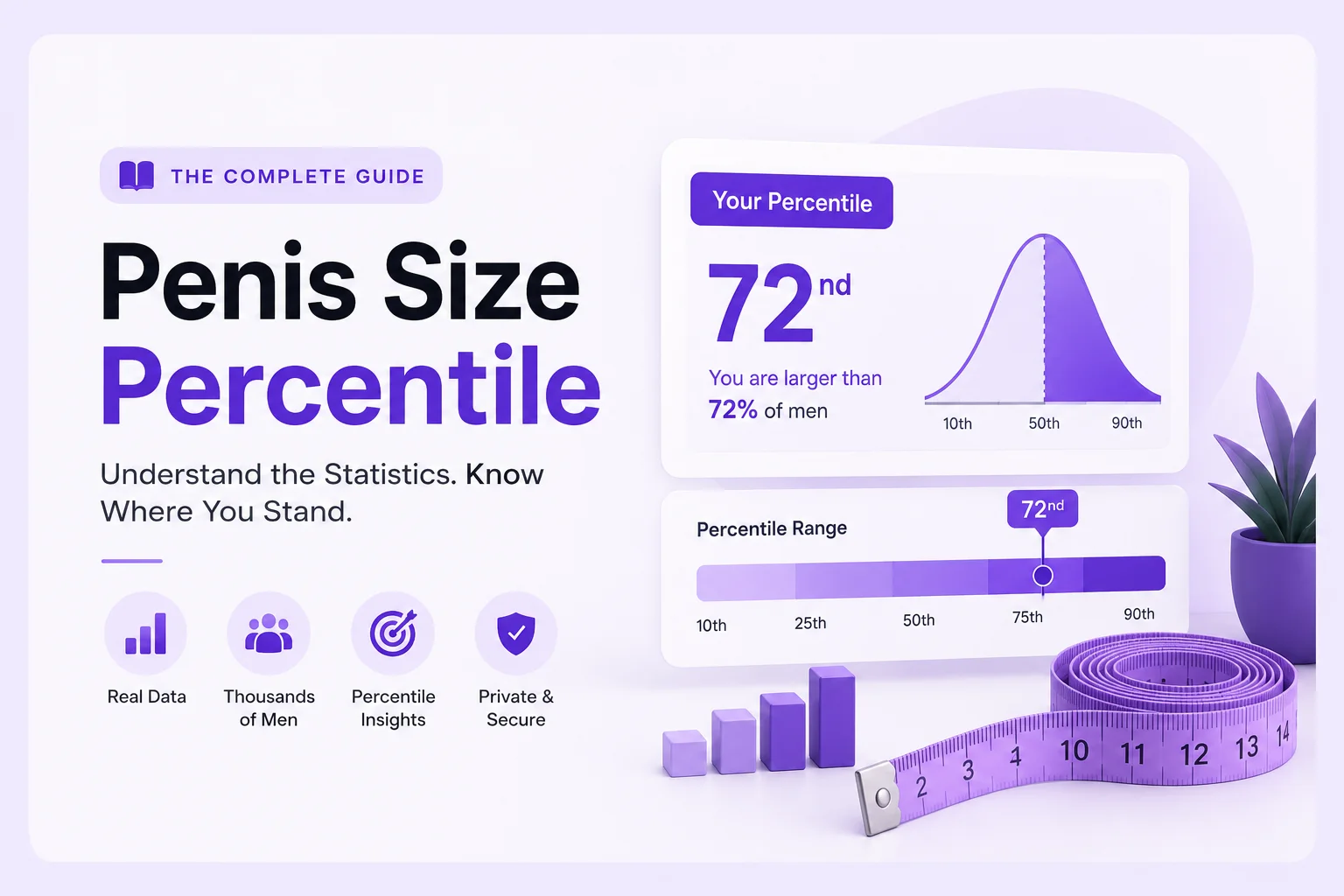
A penis size percentile explains how a specific measurement compares with measurements collected from a reference population. Instead of simply reporting a length, the calculation estimates what percentage of people have a smaller measurement. This provides context that a single measurement alone cannot offer.
The process begins with accurate measurements. These measurements are then compared with published scientific datasets containing standardized data collected from thousands of adult men. Statistical models estimate where the measurement falls within the overall population distribution and produce an estimated percentile.
For example, a result in the 60th percentile means the measurement is larger than approximately 60 percent of the people included in the reference dataset. Likewise, a result in the 25th percentile indicates that around one quarter of the reference population measured below that value. These percentages describe statistical position only and should never be interpreted as indicators of health, fertility, masculinity, or sexual performance.
The quality of the scientific dataset plays an important role in the accuracy of the comparison. Larger, well designed studies generally provide more reliable percentile estimates because they include a broader range of participants and use consistent measuring methods. Measurement accuracy is equally important because even a small recording error can shift the estimated percentile.
Before comparing measurements with population data, many people use the Penis Size Calculator to estimate their measurements or explore the Penis Visualizer to better understand how different measurements may appear. The Penis Volume Calculator provides additional information by estimating overall volume, giving users a broader understanding of their measurements beyond percentile rankings alone.
If you are interested in seeing how specific measurements compare with published research, our detailed guides for Penis Size Percentile Calculator 6 Inches Erect, Penis Size Percentile Calculator 7 Inches Erect, Penis Size Percentile Calculator 8 Inches Erect, Penis Size Percentile Calculator 17 cm Erect, and Penis Size Percentile Calculator 19 cm Erect explain how these individual measurements fit within the overall statistical distribution.
The Key Factor That Changes Your Result
How Accurate Measurement Affects Your Percentile
Accurate measurement is the single most important factor affecting any percentile calculation. Since percentile estimates rely on precise statistical comparisons, even a small measuring error can noticeably change the final result. A difference of only a few millimeters may shift a measurement into a different percentile range, particularly when it falls close to the boundary between two statistical groups.
Consistency is just as important as accuracy. Measuring from different starting points, using different techniques, or applying different amounts of pressure can produce different values for the same person. Scientific research minimizes these differences by following standardized measuring procedures for every participant. Using the same approach each time improves the reliability of your own comparison with published data.
Before comparing your measurements with percentile data, it is recommended to read How to Measure Penis Correctly. Following a standardized measuring method will help ensure that the values used with the Penis Size Calculator, Penis Visualizer, and Penis Volume Calculator are as accurate and consistent as possible.
Why Results Differ Between People
Variation is a natural characteristic of every human population. Genetics, biological development, body proportions, and normal anatomical diversity all contribute to the wide range of measurements observed among healthy adults. A percentile reflects this variation by comparing each measurement with a statistical distribution rather than treating one measurement as the standard for everyone.
Measurement conditions can also influence the result. Differences in technique, body position, temperature, or recording methods may produce small variations between measurements taken at different times. Following a consistent measuring process helps reduce these differences and produces more reliable comparisons.
Another important factor is the scientific dataset used for comparison. Population studies differ in sample size, participant demographics, geographic regions, and research methods. Although high quality studies generally produce similar overall patterns, minor differences between datasets can result in slightly different percentile estimates.
Understanding penis size distribution helps explain why percentile calculations should always be viewed as statistical estimates rather than exact rankings. They provide meaningful context for comparing measurements with a larger population but should never be considered a measure of health, physical ability, or personal worth.
Using the Information Correctly
Understanding your percentile is only one part of interpreting your measurements. A percentile provides statistical context, but it does not tell the complete story. Combining percentile information with measurement tools can provide a more comprehensive understanding.
If you have not yet measured yourself, begin with How to Measure Penis Correctly. After recording your measurements, use the Penis Size Calculator to estimate your measurements, explore the Penis Visualizer to see how different measurements may appear, and calculate estimated volume using the Penis Volume Calculator.
You can then compare your measurements with our dedicated percentile guides, including Penis Size Percentile Calculator 6 Inches Erect, Penis Size Percentile Calculator 7 Inches Erect, Penis Size Percentile Calculator 8 Inches Erect, Penis Size Percentile Calculator 17 cm Erect, and Penis Size Percentile Calculator 19 cm Erect, to understand how specific measurements compare with published scientific research.
Real Questions People Ask
What does penis size percentile actually tell you?
A penis size percentile tells you how your measurement compares with those of a larger reference population. Instead of focusing on whether a measurement is above or below average, it shows the percentage of people whose measurements are smaller than yours.
For example, if your measurement falls in the 70th percentile, it means it is larger than approximately 70% of the people included in the scientific dataset. It does not indicate health, fertility, masculinity, or sexual performance it is simply a statistical comparison.
Is penis size percentile based on scientific research?
Yes. Reputable percentile calculations are based on published scientific studies that collect standardized measurements from large groups of adult men. Researchers use these datasets to understand the natural distribution of measurements across a population.
Different studies may use different sample sizes, participant demographics, or statistical methods, which is why percentile estimates can vary slightly between calculators. However, well designed research generally produces similar overall distributions.
Why do different calculators show different percentile results?
Different calculators may rely on different scientific datasets or statistical models. Some use older research, while others use more recent meta analyses or larger population studies. Small differences in measurement methods and rounding can also affect the final percentile estimate.
Using a calculator based on reliable scientific evidence and entering accurate measurements helps produce the most meaningful comparison.
Which measurement should I compare?
Most percentile discussions focus on erect length, as it is the measurement most commonly reported in scientific research. However, circumference (girth) and estimated volume can also provide valuable information when interpreted alongside length measurements.
If you want a broader understanding of your measurements, use the Penis Size Calculator to estimate measurements, explore the Penis Visualizer to understand how different measurements may appear, and use the Penis Volume Calculator to estimate overall volume.
Where can I compare specific measurements?
If you want to know how a particular measurement compares with published research, our dedicated guides provide more detailed explanations for common measurements.
You can explore:
- Penis Size Percentile Calculator 6 Inches Erect
- Penis Size Percentile Calculator 7 Inches Erect
- Penis Size Percentile Calculator 8 Inches Erect
- Penis Size Percentile Calculator 17 cm Erect
- Penis Size Percentile Calculator 19 cm Erect
Each guide focuses on a specific measurement and explains where it typically falls within the overall statistical distribution.
Frequently Asked Questions
What is the average penis size percentile?
The average measurement typically falls close to the middle of the population distribution. In statistical terms, this is generally around the 50th percentile, although the exact value depends on the scientific dataset used for comparison.
Can I calculate my percentile at home?
Yes. Once you have taken accurate measurements, you can compare them with published scientific data to estimate your percentile. Following a standardized measuring method improves the accuracy of the comparison.
Why is accurate measurement important?
Even small measuring errors can change the estimated percentile because the calculation compares your measurement with precise statistical data. Consistent measuring techniques help produce more reliable results.
Does age affect penis size percentile?
Most scientific datasets used for adult percentile calculations include fully developed adults. Because of this, adult percentile estimates are generally intended for adults rather than adolescents.
Can body weight affect measurements?
Body composition can influence the visible appearance of the penis, particularly around the pubic area, but percentile calculations compare the recorded measurement itself rather than visual appearance. Using a consistent measuring method helps ensure more accurate comparisons.
Is a higher percentile always better?
No. A percentile is simply a statistical ranking within a population. It does not indicate health, attractiveness, confidence, fertility, or sexual function. Higher and lower percentiles are both part of normal biological variation.
Why do scientific studies report different averages?
Different research studies include different populations, sample sizes, geographic regions, and measuring protocols. These differences can lead to small variations in reported averages and percentile estimates.
Can the same person get different results?
Yes. Measurements may vary slightly because of differences in measuring technique, conditions, or rounding. Taking measurements consistently helps minimize these differences.
Should I compare both inches and centimeters?
Yes. Both units represent the same measurement. Reliable calculators automatically convert between units, allowing you to use whichever measurement system you are most comfortable with.
Where can I learn how to measure correctly?
For step by step instructions, best practices, and common mistakes to avoid, read How to Measure Penis Correctly before comparing your measurements with percentile data.
Key Takeaways
- Penis size percentile compares your measurements with standardized scientific population data.
- Percentiles provide statistical context rather than judging whether a measurement is good or bad.
- Accurate measurement is essential for obtaining reliable percentile estimates.
- Different scientific studies may produce slightly different percentile values because of differences in methodology and sample populations.
- Tools such as the Penis Size Calculator, Penis Visualizer, and Penis Volume Calculator can help you better understand different aspects of your measurements.
- Dedicated percentile guides for 6 inches, 7 inches, 8 inches, 17 cm, and 19 cm provide more detailed information for those specific measurements.
- Following a standardized measuring method improves the accuracy and consistency of every comparison.
Learn More
If you are new to taking measurements, begin with How to Measure Penis Correctly to learn the standardized techniques used in scientific research.
To estimate different aspects of your measurements, explore the following tools:
If you want to compare a specific measurement with published research, continue with one of these detailed guides:
- Penis Size Percentile Calculator 6 Inches Erect
- Penis Size Percentile Calculator 7 Inches Erect
- Penis Size Percentile Calculator 8 Inches Erect
- Penis Size Percentile Calculator 17 cm Erect
- Penis Size Percentile Calculator 19 cm Erect
Together, these resources provide a comprehensive understanding of penis measurements, statistical percentiles, and the scientific research behind them.
Related Pages
Measurement Tools
Measurement Guide
- How to Measure Penis Correctly