
Scientific Studies on Average Penis Size: What Research Actually Shows
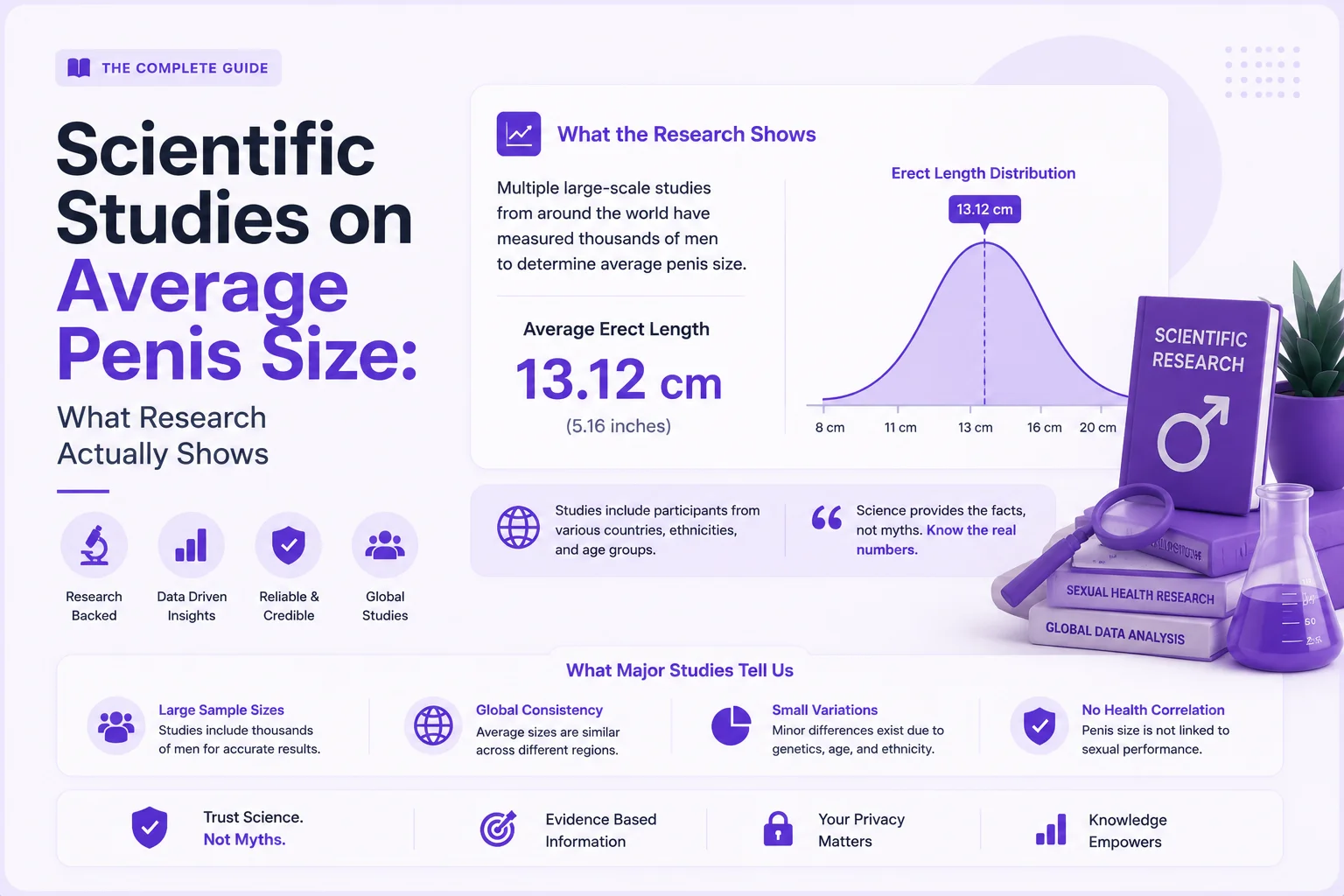
Scientific Studies on Average Penis Size: What Research Actually Shows
Table of Contents
Introduction
Medical research provides the most reliable information about average penis size because measurements are collected using standardized methods rather than personal estimates. Over the past several decades, researchers have measured thousands of adult men to understand the normal distribution of penis length and circumference. These studies form the foundation for most modern calculators, percentile charts, and educational resources.
If you have ever wondered why different websites report different averages, this guide explains how the research is performed, why study results vary slightly, and which studies are considered the most reliable.
Quick Answer
The most trusted average penis size data comes from large scientific studies that use standardized measurement techniques. The 2015 systematic review by Veale and colleagues, which combined measurements from more than 15,000 adult men, is one of the most widely cited references used for educational purposes and percentile calculations.
The Simple Explanation
Researchers do not estimate average penis size by asking people to report their own measurements. Instead, trained professionals follow standardized measuring procedures to reduce errors and improve consistency.
Most modern educational resources and calculators rely on peer reviewed studies because they include larger sample sizes and better measurement methods. This makes the findings more reliable than anecdotal reports or surveys.
To understand how these studies are used in percentile calculations, read Penis Size Percentile. If you would like to compare your own measurements after following the correct method, use the Penis Size Calculator.
Major Scientific Studies
Veale et al. (2015)
This systematic review analyzed measurements from more than 15,000 adult men across multiple studies. It remains one of the most frequently cited references for average erect length and circumference.
Wessells et al.
This research helped establish standardized measurement techniques and highlighted the importance of measuring from the pubic bone to the tip.
Promodu et al.
This study examined measurements within a specific population and demonstrated how average values can differ slightly between geographic groups while remaining within a similar overall range.
Other Population Studies
Researchers from Europe, Asia, North America, and other regions have published additional studies over the years. While reported averages vary slightly, the overall statistical distribution remains remarkably consistent across high quality research.
Why Different Studies Show Different Results
Several factors explain why one study may report a slightly different average than another.
- Different sample sizes.
- Different countries and populations.
- Slight differences in measurement procedures.
- Different participant age ranges.
- Statistical analysis methods.
These differences are usually small and do not significantly change the overall conclusions.
Why This Research Matters
Reliable scientific studies help remove misinformation and provide realistic reference values for comparison.
They also form the basis for:
- Percentile calculators
- Educational guides
- Medical publications
- Statistical comparison charts
Because the measurements are collected using standardized methods, they are much more reliable than self reported values found on many websites.
What the Research Does Not Show
Scientific studies describe averages and distributions across large populations.
They do not measure:
- Sexual performance
- Fertility
- Masculinity
- Relationship satisfaction
- Overall health
Understanding this distinction helps readers interpret the findings correctly.
When Research Has Limitations
No scientific study is perfect.
Limitations include:
- Population differences.
- Volunteer participation.
- Sample selection.
- Measurement conditions.
- Small differences between research methods.
Despite these limitations, large peer reviewed studies remain the most reliable source of information currently available.
| Study | Year | Sample Size | Why It Matters |
|---|---|---|---|
| Veale et al. | 2015 | 15,521 | Most widely cited meta analysis used for percentile comparisons |
| Wessells et al. | 1996 | 80 | Helped standardize measurement methods |
| Promodu et al. | 2007 | 301 | Regional population study showing natural variation |
Common Questions
What is the most accurate penis size study?
The most widely referenced study is the 2015 systematic review by Veale and colleagues, published in BJU International. It combined data from more than 15,000 adult men and used standardized measurements from multiple scientific studies. Because of its large sample size and rigorous methodology, it is commonly used as a reference for educational resources and percentile comparisons.
How many men were included in penis size research?
The number of participants varies between studies. Smaller studies may include a few hundred men, while larger reviews combine data from many individual studies. The Veale et al. review analyzed measurements from more than 15,000 adult men, making it one of the largest scientific analyses available.
Which study do percentile calculators use?
Many educational percentile calculators rely on published medical research rather than a single study. The 2015 Veale review is frequently used because it combines multiple datasets and provides standardized averages for erect length and circumference. Some calculators may also reference other peer reviewed studies depending on their methodology.
Why do different studies report different average sizes?
Different studies often examine different populations, age groups, geographic regions, and sample sizes. Small differences in measuring techniques can also influence the reported averages. Although individual numbers may vary slightly, well designed studies generally show similar overall patterns and distributions.
Are online penis size statistics reliable?
It depends on the source. Statistics taken from peer reviewed medical research are generally much more reliable than figures collected through online surveys or self reported measurements. When reading about average penis size, look for references to published scientific studies rather than anonymous internet claims.
Related Learning
Scientific research provides the foundation for understanding average measurements, but it is only one part of the picture. To learn how these research findings are converted into population rankings, continue with Penis Size Percentile.
If you want to compare your own measurements with scientific averages, start with How to Measure Penis Correctly and then use the Penis Size Calculator. You can also explore Penis Visualizer and Penis Volume Calculator to better understand different aspects of your measurements. For detailed explanations of common measurement values, read Penis Size Percentile Calculator 6 Inches Erect, Penis Size Percentile Calculator 7 Inches Erect, Penis Size Percentile Calculator 8 Inches Erect, Penis Size Percentile Calculator 17 cm Erect, and Penis Size Percentile Calculator 19 cm Erect.
Related Pages
Research & Guides
- Penis Size Percentile
- How to Measure Penis Correctly
- Erect vs Flaccid Measurement
- Penis Measurement Mistakes
Measurement Tools
Popular Percentile Guides
- Penis Size Percentile Calculator 6 Inches Erect
- Penis Size Percentile Calculator 7 Inches Erect
- Penis Size Percentile Calculator 8 Inches Erect
- Penis Size Percentile Calculator 17 cm Erect
- Penis Size Percentile Calculator 19 cm Erect