
Penis Measurement Mistakes: 10 Common Errors to Avoid
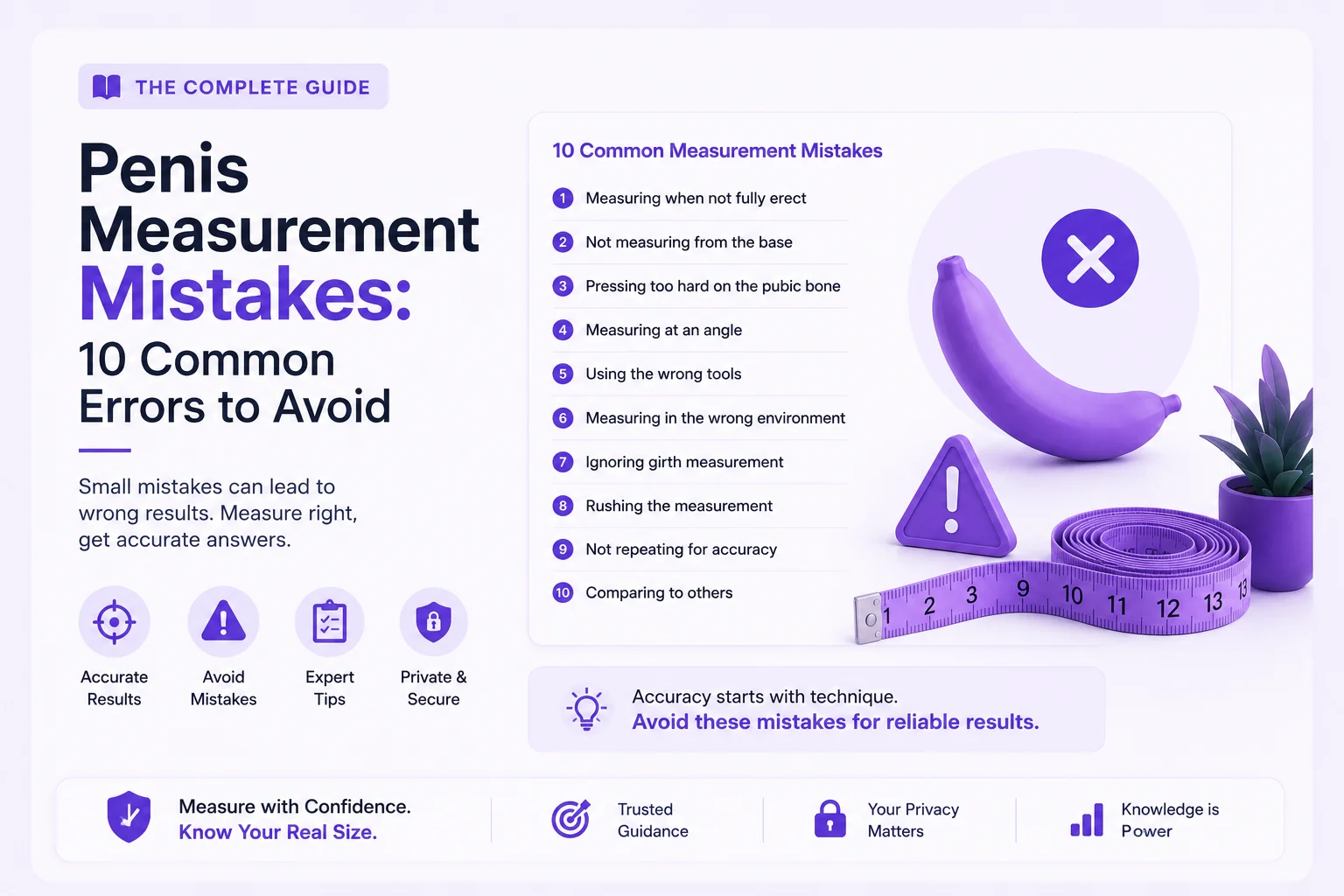
Penis Measurement Mistakes: 10 Common Errors to Avoid
Table of Contents
Introduction
Accurate measurements begin with the right technique, but many people unknowingly make small mistakes that affect their results. These penis measurement mistakes can make measurements appear shorter or longer than they actually are, leading to incorrect comparisons with scientific averages or online calculators.
The good news is that most measuring errors are easy to fix. By following a consistent method, you can obtain measurements that are much more reliable.
Quick Answer
The most common mistakes include measuring from the wrong starting point, using the wrong measuring tool, comparing flaccid and erect measurements, and measuring under different conditions each time. Using a standardized method helps produce more accurate and consistent results.
The Simple Explanation
Scientific studies use standardized measuring techniques so everyone’s results can be compared fairly. If your method is different, your measurements may not match published averages even when your actual size has not changed.
For example, measuring from the skin instead of the pubic bone usually produces a shorter reading. Likewise, measuring while flaccid one day and erect the next makes it impossible to compare results accurately.
Before recording your measurements, read How to Measure Penis Correctly to learn the recommended technique. Once you have accurate measurements, you can better understand them using Penis Size Percentile.
The 10 Most Common Measurement Mistakes
1. Measuring From the Skin Instead of the Pubic Bone
One of the biggest mistakes is starting the measurement from the skin rather than the pubic bone. Scientific studies gently press the ruler against the pubic bone to ensure consistency between people with different body fat levels.
2. Measuring While Flaccid
Flaccid size naturally changes throughout the day because of temperature, stress, and blood flow. Measuring while erect provides much more consistent results.
3. Using a Flexible Tape for Length
A flexible measuring tape can bend and follow the body’s curve, making length measurements less accurate. A rigid ruler is usually the better choice.
4. Using Different Measuring Methods
Changing your technique each time makes it difficult to know whether your size actually changed or whether the measurement method changed.
5. Measuring at Different Times of the Day
Body temperature, exercise, and hydration can influence temporary measurements. Measuring under similar conditions helps improve consistency.
6. Recording Only One Measurement
Even when using the correct technique, small variations are normal. Taking two or three measurements and calculating the average usually provides a more reliable estimate.
7. Measuring Along the Side or Bottom
Length should be measured along the top side of the penis because this is the standardized method used in most scientific studies.
8. Pulling the Measuring Tape Too Tight
When measuring girth, the tape should fit comfortably around the shaft without compressing the skin. Pulling it too tightly can reduce the recorded circumference.
9. Comparing Different Units Incorrectly
Switching between inches and centimeters without proper conversion can create unnecessary confusion. Always record your measurements using the same unit.
10. Comparing Yourself With Unverified Online Sources
Many websites publish average sizes without explaining where the data comes from. Reliable comparisons should be based on well-designed scientific research rather than anecdotal claims.
What Factors Increase Measuring Errors
Several factors can make measurements less reliable:
- Incorrect ruler placement
- Different body positions
- Measuring while partially erect
- Cold room temperature
- Excess pressure against the ruler
- Different measuring tools
- Inconsistent recording methods
Following the same procedure each time minimizes these variables and produces more dependable results.
What Your Result Actually Means
A single incorrect measurement does not necessarily reflect your actual size. Small measuring errors can easily change the recorded value by several millimeters, which may also affect percentile comparisons.
Using Penis Size Calculator after measuring correctly helps you keep consistent records and better understand your measurements over time.
When These Mistakes Matter Less
Minor differences are usually not important for personal tracking, especially if the same measuring method is used every time. Consistency is often more valuable than achieving perfect precision.
If you are comparing your measurements with scientific averages or percentile data, however, using the correct measuring technique becomes much more important because even small errors can influence the comparison.
Common Questions
Why do my penis measurements change?
Small differences between measurements are normal. Factors such as temperature, stress, physical activity, hydration, and measuring technique can all affect the recorded value. Using the same method under similar conditions each time helps produce more consistent results.
Should I press the ruler against the pubic bone?
Yes. Most scientific studies measure from the pubic bone to the tip of the erect penis. Gently pressing the ruler against the pubic bone provides a standardized starting point and reduces differences caused by body fat.
Can body fat affect penis measurements?
Body fat does not change the actual length of the penis, but it can affect the visible length. Measuring from the pubic bone instead of the skin surface helps ensure a more accurate and consistent measurement regardless of body type.
How often should I measure?
There is usually no need to measure frequently. If you want the most reliable estimate, take two or three measurements during the same session and calculate the average. Repeating the process every few months is generally sufficient unless you are tracking changes for a specific reason.
What is the most accurate way to measure?
The most accurate approach is to use a rigid ruler for length and a flexible measuring tape for girth while the penis is fully erect. Following the same technique each time helps reduce measurement errors and improves consistency.
Related Learning
Avoiding common measuring mistakes is just as important as knowing the correct technique. Start by reading How to Measure Penis Correctly to learn the standardized measuring method used in scientific studies.
Once you have accurate measurements, use the Penis Size Calculator to record your measurements consistently. To understand how your measurements compare with published research, continue to Penis Size Percentile. If your result matches a commonly searched value, guides such as Penis Size Percentile Calculator 6 Inches Erect provide more detailed explanations.
Related Pages
Measurement Guides
Measurement Tools
Popular Percentile Guides
- Penis Size Percentile Calculator 6 Inches Erect
- Penis Size Percentile Calculator 7 Inches Erect
- Penis Size Percentile Calculator 8 Inches Erect
- Penis Size Percentile Calculator 17 cm Erect
- Penis Size Percentile Calculator 19 cm Erect